
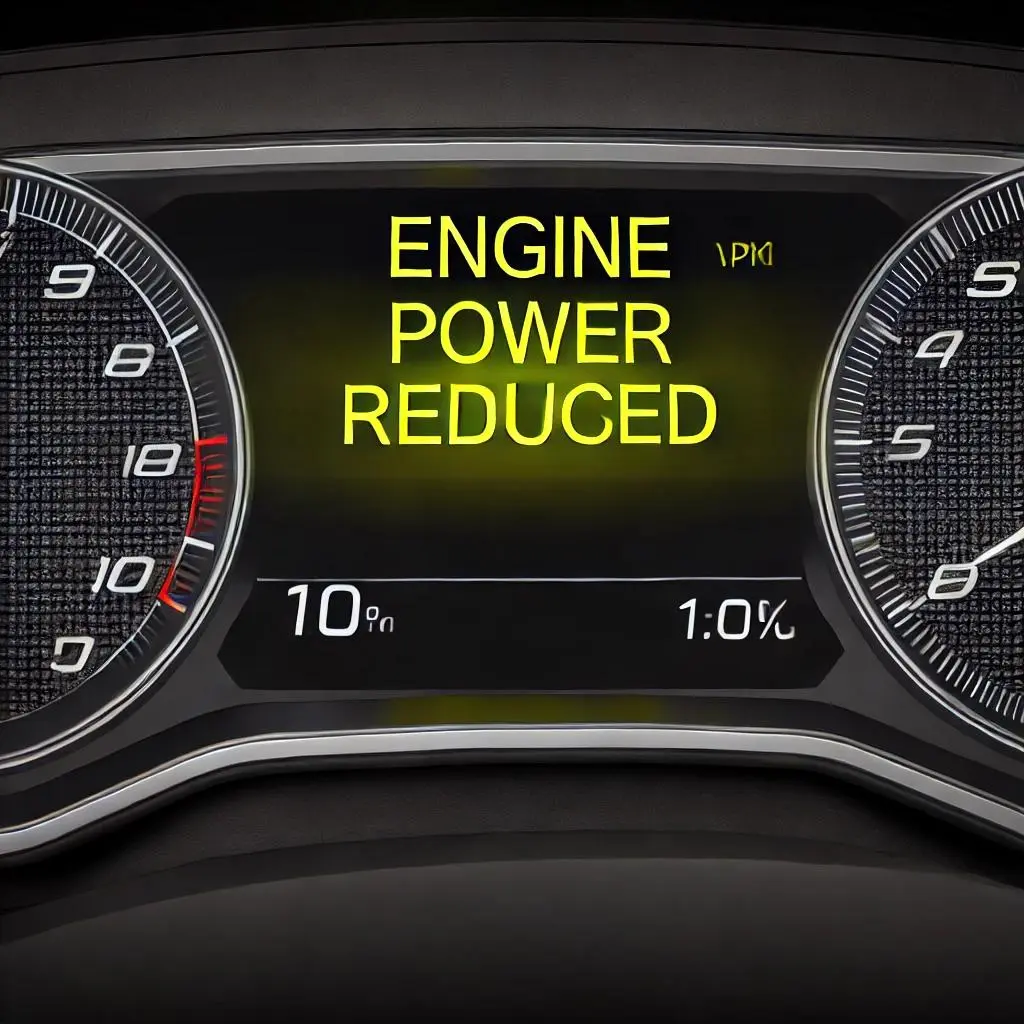
Common Causes of Engine Malfunction Power Reduced
When you’re driving and suddenly see a warning that says “Engine Power Reduced,” it can be really scary.
Your car might slow down, struggle to accelerate, or act like it’s lost its energy. This is your car’s way of protecting itself when something’s not working right. But why does this happen?
Let’s dive into the most common causes of engine malfunction and reduced power.
We’ll explain each one in a way that’s easy to understand—no complicated mechanic talk here.
1. Faulty Throttle Body
Your throttle body helps your engine breathe. It opens and closes to let air in when you step on the gas pedal. The more air that gets in, the more power your engine can make.
But when the throttle body gets dirty or damaged, it can’t open and close properly. This messes up the air flow, and your engine may not get the air it needs to run strong. That’s when your car reduces power to avoid further problems.
Signs of a bad throttle body:
- Slow or no response when you press the gas
- Engine feels like it’s choking or struggling
- Check Engine Light turns on
What to do:
You can clean the throttle body if it’s dirty, or replace it if it’s broken. A mechanic can help figure out which one is needed.
2. Bad Accelerator Pedal Sensor
Modern cars use something called a throttle position sensor instead of a cable to control the gas pedal. This sensor tells the engine how hard you’re pressing the gas, so it can adjust power.
If this sensor breaks or sends the wrong signals, your car doesn’t know how much gas you want. So, to avoid making things worse, it limits power.
Signs of a bad sensor:
- Pressing the gas does nothing
- Jerky movements while driving
- Warning lights on the dashboard
What to do:
A simple sensor replacement can fix this problem. Don’t keep driving if your car isn’t responding correctly.
3. Dirty or Broken Mass Air Flow (MAF) Sensor
The MAF sensor keeps track of how much air goes into your engine. It helps your car know the right mix of air and fuel.
When this sensor gets dirty or breaks, your engine might get too much fuel or not enough. Either way, it won’t run smoothly—and it might reduce power to avoid damage.
Signs of MAF issues:
- Your car uses more gas than usual
- Engine misfires or shakes
- Hard time starting the car
What to do:
Sometimes cleaning the sensor is enough. But if it’s broken, replacing it is the best option.
4. Clogged Catalytic Converter
The catalytic converter is like a filter for your exhaust. It helps clean the gases that come out of your engine.
Over time, this part can get clogged from dirt or carbon buildup. When that happens, gases can’t escape properly, and your engine can’t breathe. So, your car reduces power to protect the engine.
Signs of a clogged converter:
- Rotten egg smell from the exhaust
- Your car feels slow or heavy
- Engine gets hot quickly
What to do:
You may need to replace the catalytic converter. Driving with a clogged one can damage your engine, so don’t wait too long.
5. Engine Control Unit (ECU) Problems
The ECU is like the brain of your car. It controls everything from fuel delivery to timing and sensors. If it starts acting up, your car may not know what to do—so it reduces power to avoid making things worse.
Signs of ECU trouble:
- Car acts strange for no clear reason
- Lights on the dash keep turning on and off
- Car has trouble starting
What to do:
A technician can scan your ECU with a special tool to see if it’s working right. Sometimes it just needs a reprogram. Other times, it needs to be replaced.
6. Transmission Issues
Sometimes the engine isn’t the problem at all—it’s the transmission. If your transmission is slipping, stuck in a gear, or overheating, the car might go into “limp mode.” This mode reduces engine power to prevent major damage.
Signs of a bad transmission:
- Gear changes feel rough or don’t happen at all
- Car won’t move or is very slow
- Weird noises when driving
What to do:
Start by checking the transmission fluid. If that’s not the issue, a mechanic may need to repair or replace the transmission.
7. Loose or Damaged Wiring
Cars today are full of wires and sensors. If a wire gets damaged or comes loose, it can break the communication between important parts like the throttle, ECU, or fuel system. This often causes the engine to reduce power.
Signs of wiring problems:
- Warning lights come and go
- Power cuts out randomly
- Engine misfires or struggles
What to do:
A mechanic will need to check the wiring system for breaks or loose connections. These issues are often cheap to fix but hard to find without tools.
8. Low Fuel Pressure
Engines need a steady supply of fuel. If your fuel pump is weak or your fuel filter is clogged, fuel doesn’t flow right. That leads to poor performance, misfiring, and—you guessed it—reduced power.
Signs of low fuel pressure:
- Engine sputters or stalls
- Slow to accelerate
- Car may not start at all
What to do:
A mechanic can test your fuel pressure. If it’s low, replacing the fuel filter or pump can fix the problem.
9. Bad Oxygen or Knock Sensors
Your car uses sensors to make sure it runs properly. Two important ones are the oxygen sensor (measures exhaust gases) and the knock sensor (detects weird engine sounds).
If either of these fails, your car might not burn fuel efficiently. That can lead to bad performance, poor gas mileage, and engine damage. To avoid that, your car reduces power.
Signs of sensor failure:
- Check engine light stays on
- Car shakes or misfires
- You use more fuel than normal
What to do:
A diagnostic test will tell you which sensor is bad. Replacing them is a common and usually affordable fix.
10. Weak Battery or Charging System
A weak battery or bad alternator doesn’t just stop your car from starting. It also messes with all the electronics, including your engine sensors.
When sensors don’t get enough power, they send the wrong signals. Your car can’t take chances, so it limits power just in case something’s seriously wrong.
Signs of electrical problems:
- Lights dim when idling
- Car is hard to start
- Dashboard lights act strange
What to do:
Have your battery and alternator tested. If either one is bad, replacing them can bring everything back to normal.
Final Thoughts
The “Engine Power Reduced” message is more than just a warning—it’s your car’s way of saying, “Help me before it gets worse.” Most of the time, the issue is something that can be fixed without huge costs. But the longer you wait, the worse (and more expensive) the damage can get.
So don’t ignore the signs. Use this guide to understand what might be going wrong. Then, visit a mechanic and get it fixed.
Keep your car happy, and it’ll keep you safe on the road.


